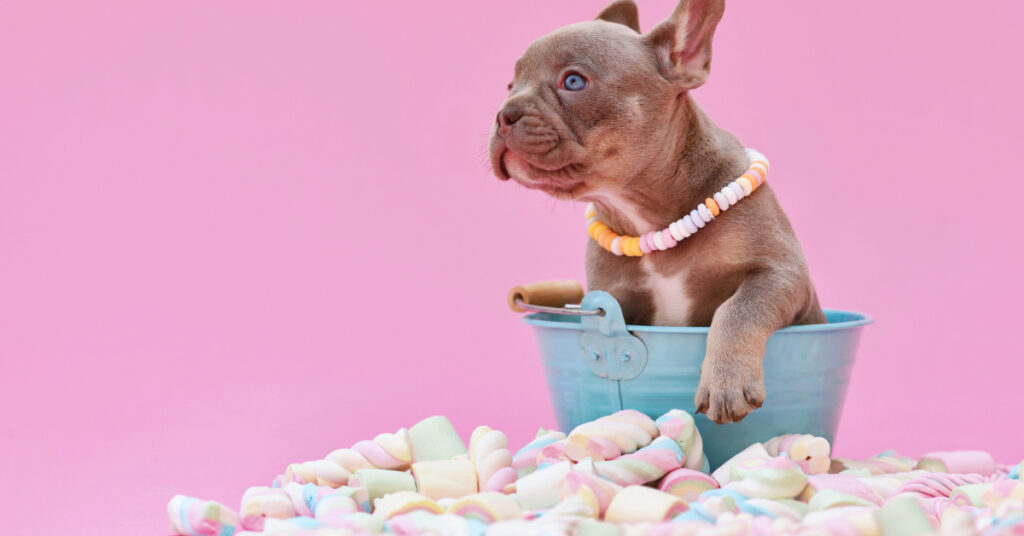
So, can dogs eat marshmallows? In most cases, a plain marshmallow or two won’t cause serious harm, but marshmallows offer no real nutritional value and can create problems depending on what else is mixed in. Whether your dog snagged one off the counter or gobbled a handful from an open bag, it helps to know what’s actually inside that fluffy treat and when a phone call to the vet becomes necessary. Little Silver Animal Hospital sees this question often from local pet owners, especially around campfire season and the holidays when marshmallows are everywhere. This guide walks through the ingredients that matter most, the risks beyond sugar, and the steps to take if your dog has already eaten some.
Artificial Sweeteners in Marshmallows
Before answering “Can dogs eat marshmallows?” with any confidence, you need to check the label. Most standard marshmallows are sweetened with plain sugar, but a growing number of “sugar-free” or “diet” marshmallows use xylitol instead. Xylitol is where the real danger lives, and it’s the single biggest factor separating a harmless snack from a genuine emergency.
Why Xylitol Is So Dangerous
Xylitol triggers a rapid release of insulin in dogs, which can cause blood sugar to crash within 10 to 60 minutes of ingestion. This is a very different reaction than what happens in humans, who can eat xylitol safely without any issue. Even a small amount of a xylitol-sweetened marshmallow can be enough to affect a smaller dog, and left unaddressed, a severe blood sugar drop can progress to seizures or liver damage. This is why any question about whether dogs can eat marshmallows has to start with the ingredient list rather than the marshmallow itself.
Reading Labels Before You Answer Can Dogs Eat Marshmallows
Because ingredient lists vary by brand, the honest answer to “Can dogs eat marshmallows?” always depends on what’s printed on the package. Look for these clues before assuming a marshmallow is safe:
- “Sugar-free,” “diet,” or “keto” marshmallows almost always contain xylitol or another sugar alcohol
- Ingredient lists that mention “birch sugar” are simply describing xylitol under a different name
- Bulk or bagged marshmallows sold at grocery stores are typically sugar-based, but store-brand “fun size” or novelty marshmallows sometimes swap formulas without much warning on the front label
If there’s any doubt about the ingredients, treat the situation as though your dog ate something unsafe and reach out to Little Silver Animal Hospital at (732) 842-8266 right away rather than waiting to see what happens. A quick phone call with the packaging in hand is far safer than guessing.
Other Risks of Feeding Marshmallows to Dogs
Even when the answer to “Can dogs eat marshmallows?” is a cautious “yes, in small amounts,” plain marshmallows still carry risks that have nothing to do with xylitol. Sugar content, texture, and portion size all play a role in how a dog’s body handles the treat, and none of these factors show up on a simple pass-or-fail answer to “Can dogs eat marshmallows?”
Digestive Upset From Sugar and Additives
This is another angle pet owners need when weighing whether dogs can eat marshmallows against their own dog’s diet. A dog’s digestive system isn’t built to process large amounts of refined sugar. Eating several marshmallows in one sitting can lead to an upset stomach, gas, or diarrhea within a few hours of ingestion. Dogs with sensitive stomachs or existing conditions like pancreatitis are especially prone to a reaction, which is another reason the question “Can dogs eat marshmallows?” deserves more than a quick guess or a shrug. Repeated exposure to sugary treats can also contribute to weight gain over time, which carries its own long-term health consequences.
Choking and Blockage Concerns
Marshmallows are soft, but their sticky, dense texture can pose a choking risk for small dogs or dogs that tend to swallow food quickly without chewing. In rare cases, a large quantity eaten at once can contribute to a gastrointestinal blockage, particularly in puppies or toy breeds whose digestive tracts are narrower and less forgiving.
Common triggers our team hears about include:
- Dogs raiding an open bag left on a counter or picnic table
- Marshmallows mixed into trail mix, hot cocoa packets, or rice cereal treats
- Roasted marshmallows dropped near a campfire or fire pit, sometimes still hot
How Many Marshmallows Are Too Many for Dogs?
There isn’t a single universal number that answers “Can dogs eat marshmallows safely?” for every dog, because size, age, and health history all factor into the equation. A single plain marshmallow is unlikely to cause a large breed dog any trouble, but that same marshmallow represents a much bigger relative dose for a five-pound toy breed, which is exactly why pet owners in Little Silver, NJ ask this question so often.
Factoring in Size and Sensitivity
Smaller dogs process sugar and any hidden xylitol far less efficiently than larger dogs do. A Chihuahua that eats three marshmallows is taking in proportionally far more than a Labrador eating the same amount, which is why weight matters as much as the marshmallow count itself. Puppies, senior dogs, and dogs managing diabetes or pancreatitis also tend to react more strongly to sugar than a healthy adult dog would.
When Quantity Becomes a Concern
As a general guideline, any of the following situations warrant closer attention rather than a wait-and-see approach:
- A small dog under 15 pounds eating more than one or two marshmallows
- Any dog consuming marshmallows from an unlabeled or sugar-free source
- A dog with a history of pancreatitis, diabetes, or a sensitive stomach getting into marshmallows of any kind
Little Silver Animal Hospital recommends calling ahead with the brand name and ingredient details on hand, since that information speeds up how quickly our team can assess whether the amount eaten is a genuine concern.
What Should You Do If Your Dog Ate Marshmallows?
Once you’ve confirmed your dog got into marshmallows, the next steps matter more than dwelling on whether your dog can eat marshmallows in the abstract. Acting quickly and calmly gives your dog the best possible outcome, and having a plan ready removes a lot of the panic from the moment.
Steps to Take Right Away
Answering “Can dogs eat marshmallows?” after the fact starts with figuring out exactly what happened. Start by identifying exactly what was eaten. Check the packaging for xylitol, birch sugar, or any other sugar alcohol, and try to estimate how many marshmallows are missing from the bag. Having this information ready before you call saves valuable time once you’re on the phone, since our team can start narrowing down next steps immediately rather than asking follow-up questions first.
Watching for Warning Signs
Symptoms from xylitol exposure can appear quickly, so it’s worth knowing what to watch for while you’re reaching out for guidance. Signs that warrant urgent attention include vomiting, weakness, wobbliness, or unusual lethargy in the hours after your dog ate marshmallows. Because these symptoms can escalate fast, this is not a situation for guesswork or at-home remedies of any kind.
Contact Little Silver Animal Hospital as soon as you suspect an issue, and have this information ready when you call:
- The brand and flavor of marshmallow, if known
- Roughly how many your dog ate and when it happened
- Your dog’s current weight and any existing health conditions
Marshmallows, Curiosity, and Knowing When to Call
Dogs are curious by nature, and a dropped marshmallow or an unattended bag is often too tempting to resist. The real takeaway from “Can dogs eat marshmallows?” isn’t a flat yes or no answer. It’s that ingredients, portion size, and your individual dog’s health history all shape the outcome, and no two situations play out exactly the same way. A single plain marshmallow is rarely an emergency, but xylitol changes the equation entirely, and quantity matters far more than most pet owners expect going in.
Little Silver Animal Hospital serves pet owners throughout Little Silver, NJ and the surrounding area, and our team is always ready to answer questions before a small mishap becomes a bigger worry. If your dog has gotten into marshmallows and something feels off, call us at (732) 842-8266 or book an appointment online! A quick call now, with the packaging and a rough count on hand, can make all the difference in how smoothly the situation resolves.